Stamped Concrete vs. Pavers: What Nashville Homeowners Should Choose
You've decided your Nashville driveway or patio needs an upgrade. Now comes the question almost every homeowner eventually asks: stamped concrete or pavers?
Both look great in photos. Both can dramatically improve your home's curb appeal. But they perform very differently in Nashville's climate, carry different long-term costs, and require different levels of maintenance. This guide gives you an honest breakdown so you can make the right call for your specific project.
The short answer: for most Nashville homeowners, stamped concrete delivers better value, lower long-term maintenance, and a more seamless finished look. Pavers make sense in specific situations — and we'll tell you exactly when.
What Is Stamped Concrete?
Stamped concrete is poured as a single continuous slab, then textured and imprinted while still wet using rubber stamp mats that mimic patterns like flagstone, slate, cobblestone, brick, or wood planks. Color is added through integral pigment in the mix, a dry-shake color hardener applied to the surface, or acid staining after the pour.
The result is a seamless decorative surface that looks like premium natural material — without the gaps, weeds, or shifting that come with individual units.
What Are Pavers?
Pavers are individual units — typically concrete, brick, or natural stone — laid on a compacted sand-and-gravel base and locked together with jointing sand. They come in a wide range of colors and shapes and can be arranged in various patterns.
Because each unit is independent, pavers can be removed and replaced if one cracks or shifts. That flexibility is their biggest selling point — and we'll get to when it actually matters.
Cost
Stamped concrete typically runs $14–$22 per square foot installed in Nashville. Pavers generally start at $18–$25 per square foot for concrete pavers and can exceed $40 per square foot for natural stone like travertine or bluestone. On a standard 600 square foot driveway or patio, that gap often means $3,000–$8,000 more for a comparable paver installation.
The higher cost of pavers comes from more intensive labor, the precision required for base preparation, and the cost of the units themselves. Stamped concrete achieves a nearly identical aesthetic outcome at a meaningfully lower price point for most Nashville projects.
Durability in Nashville's Climate
Nashville sits in a climate zone with hot, humid summers and periodic hard freezes in winter — conditions that test both materials differently.
Stamped concrete poured with a 4,000+ PSI air-entrained mix handles freeze-thaw cycles without surface spalling. The seamless surface eliminates joint gaps where moisture infiltrates and causes heaving. When installed over a properly compacted aggregate base, a stamped concrete slab moves as a single unit and resists the settling that Nashville's clay-heavy soil promotes.
Pavers handle freeze-thaw reasonably well because each unit can shift independently without cracking. But that same flexibility becomes a liability over time. Nashville's expansive clay soil causes pavers to heave, sink unevenly, and develop trip hazards within 5–10 years without active re-leveling. What feels like a low-risk material often demands more ongoing attention than a well-poured slab.
Maintenance
This is where the difference becomes most apparent for Nashville homeowners in the long run.
Stamped concrete requires resealing every 3–5 years at roughly $1–$2 per square foot. That's it. No weeding, no joint sand replacement, no re-leveling individual units. A single afternoon of maintenance every few years keeps a stamped concrete patio or driveway looking sharp for decades.
Pavers require re-sanding the joints every 2–3 years, periodic re-leveling of shifted units, weed treatment in joints, and sealing on top of all that. The cumulative time and cost adds up significantly. Nashville's humidity makes joint weeds a recurring battle, and most homeowners underestimate this until they've owned a paver surface for a few years.
Repairability
This is the one category where pavers hold a genuine, meaningful advantage. If a paver cracks or stains badly, you pull out that unit and replace it. The repair is invisible and inexpensive.
Stamped concrete can be repaired — cracks can be routed and filled, and sections can be replaced — but matching the original color and pattern years later is difficult. A visible patch is more likely with stamped concrete than with pavers.
That said, a quality stamped concrete installation from an experienced Nashville contractor is unlikely to need significant repairs for 20 or more years when properly sealed and maintained. The repairability advantage of pavers is real, but it rarely needs to be exercised on a well-built project.
Aesthetics and Customization
Both options look excellent, but stamped concrete offers more design freedom. You can create a completely custom pattern, blend multiple colors, add borders in contrasting tones, incorporate saw-cut geometric designs, and achieve a seamless flowing look across large areas. Pavers are constrained by the size, shape, and color of available units — and visible joint lines run throughout regardless of pattern.
For Nashville patios that connect to pools, outdoor kitchens, or landscaped features, stamped concrete's seamlessness creates a more polished, cohesive outdoor living space. The surface feels intentional and custom rather than assembled.
When Pavers Are Actually the Better Choice
We're a concrete company, so we'll be direct: pavers are the right call in specific situations. Here's when we would honestly steer a Nashville homeowner toward pavers instead.
Pavers make sense when you need a permeable surface for stormwater management — permeable pavers allow water to pass through joints and are sometimes required by local ordinance or HOA rules. They're also a better fit when your project area has significant grade changes or irregular curves that make forming a continuous slab difficult. If you specifically want the look of natural travertine, bluestone, or cobblestone and your budget supports it, pavers are the right material. And for small accent areas like a garden path or front entry landing, the cost premium over stamped concrete is minimal while the visual impact of natural units can be high.
For large patios, driveways, pool decks, and outdoor living areas in Nashville, stamped concrete almost always delivers better overall value. But the right answer depends on your specific project and priorities.
Nashville Project Scenarios: What Would We Recommend?
Two-Car Driveway Replacement in Brentwood
Recommendation: Stamped Concrete. A 600 square foot driveway in a high-value Brentwood neighborhood. An ashlar slate stamp with a charcoal color hardener and dark release agent complements most stone and brick exteriors in the area. Stamped concrete comes in well under a comparable paver installation and requires less ongoing upkeep over the life of the home.
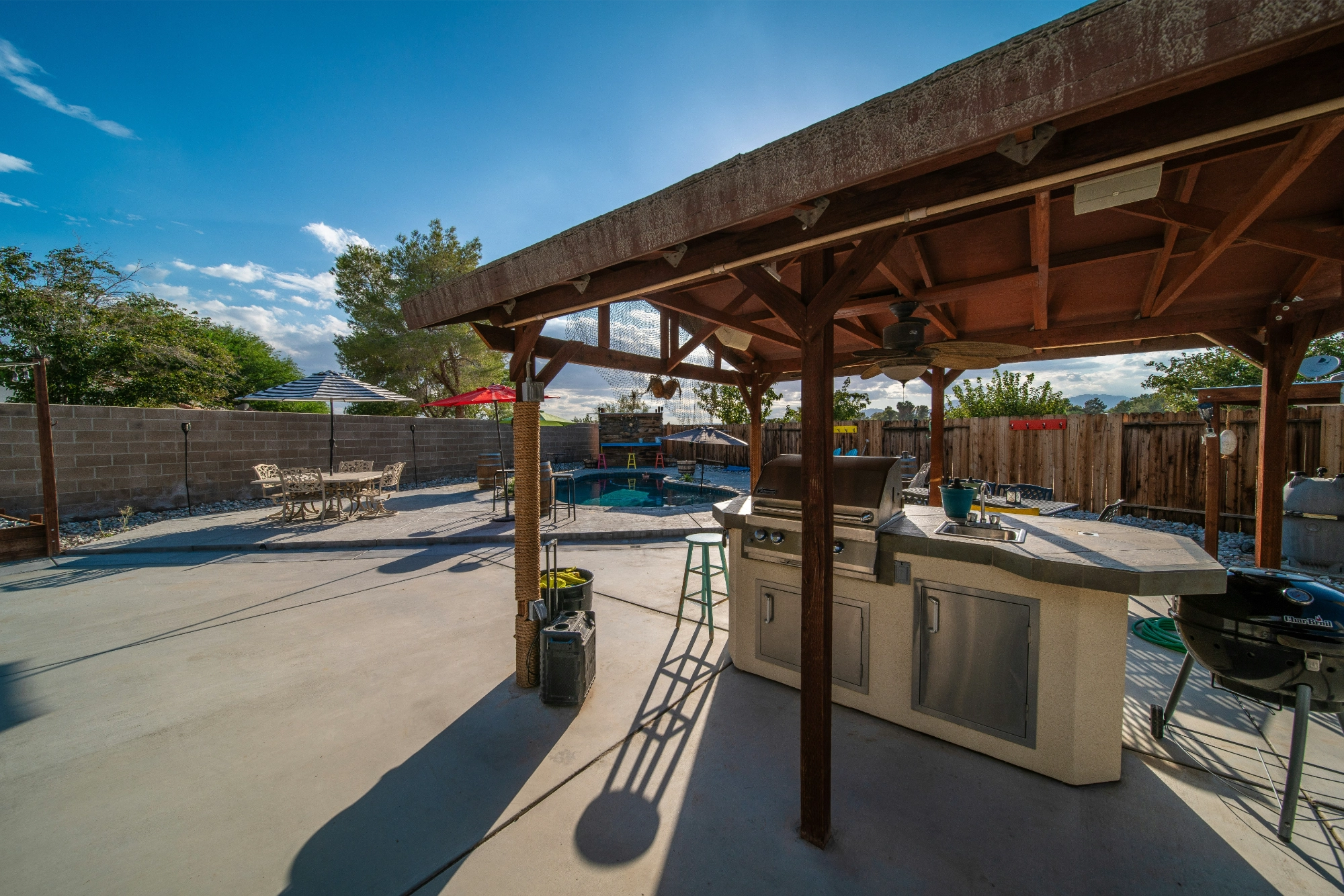
Large Backyard Patio with Outdoor Kitchen in Franklin
Recommendation: Stamped Concrete. A 500 square foot patio connecting to an outdoor kitchen and covered pergola. A seamless stamped flagstone pattern with a warm tan base and walnut release agent creates a natural stone look without joints collecting grease or debris near the cooking area. Easier to clean, easier to seal, and better looking at scale.
Front Entry Walkway in 12 South
Recommendation: Either — or a combination. A narrow front walkway is one of the few situations where pavers or a paver-border-with-stamped-concrete-interior can look exceptional. The area is small enough that the labor premium matters less, and individual pavers handle step nosings and edge details well.
Pool Deck in Green Hills
Recommendation: Stamped Concrete or Exposed Aggregate. Pool decks need a slip-resistant surface that stays cool underfoot and resists pool chemicals. Stamped concrete with a broom finish or exposed aggregate texture is ideal. Pavers around pools collect dirt and algae in joints and are harder to keep clean with constant water and chemical exposure.
What Urbanstead Concrete Delivers on Every Stamped Concrete Project
Our stamped concrete work in Nashville is built on a foundation that most contractors rush or skip entirely. We use a 4,000–5,000 PSI air-entrained concrete mix as standard on all decorative exterior work. Every project includes full subgrade compaction and a 4–6 inch aggregate base — the single most important factor in long-term performance.
We combine integral color with dry-shake color hardener for richer, more fade-resistant results than color alone. Control joints are placed strategically to manage natural concrete movement without visible random cracking. We apply premium penetrating sealers with a grip additive — not the cheap film-formers that cloud and peel within a season.
And we bring Nashville-specific experience: we understand local soil conditions, drainage patterns, and which finishes hold up in Tennessee's climate year after year.
See What Stamped Concrete Can Look Like on Your Property
We offer free consultations and can walk you through finish samples, pattern options, and realistic pricing for your Nashville project.
Call or text [YOUR PHONE] | urbansteadconcrete.com
Frequently Asked Questions
Is stamped concrete slippery when wet?
It can be with the wrong sealer. We apply penetrating sealers with a grip additive on all exterior stamped concrete projects — driveways, patios, and pool decks. A quality anti-slip sealer gives stamped concrete excellent traction even in Nashville's rainy seasons, with none of the slickness that cheaper film-forming sealers produce.
How long does stamped concrete last compared to pavers in Nashville?
A properly installed stamped concrete surface in Nashville lasts 30–50 years. Quality pavers can reach a similar lifespan but require more active maintenance — re-leveling, re-sanding, weed management — to get there. In practice, many paver installations begin showing noticeable wear and unevenness within 10–15 years without consistent upkeep.
Can stamped concrete be refinished or recolored later?
Yes. If the slab is structurally sound, the surface can be resealed in a new color tone or an overlay applied to refresh the appearance entirely. This is a meaningful advantage over pavers, where changing the look typically means a full reinstall.
What stamped concrete patterns are most popular for Nashville patios?
Ashlar slate, random flagstone, and cobblestone are consistently our most requested patterns in Nashville. For contemporary homes and pool decks, large-format tile stamps and exposed aggregate finishes are increasingly popular. We bring physical samples to every consultation so you can see and feel the options before committing.
How far out is Urbanstead Concrete currently booked in Nashville?
Our current lead time ranges from 1 to 6 weeks depending on the season and project type. Spring and early summer are our busiest periods. If you're planning a patio or driveway project for warm weather, we recommend reaching out early to get on the schedule.
Get Your Free Quote
Other Related Posts
.webp)
Stamped Concrete Patios in Nashville: Costs, Patterns & What to Know
.webp)