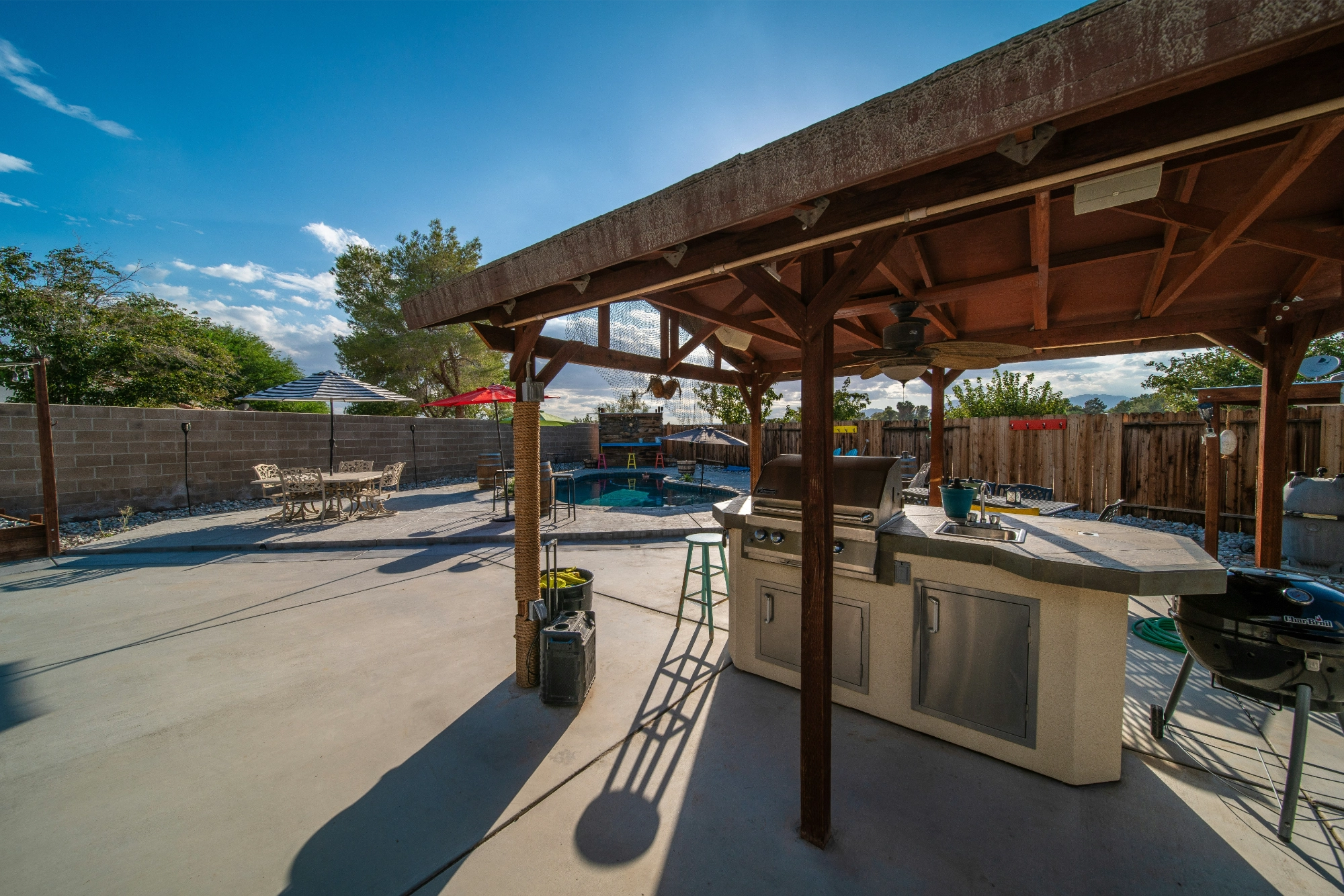
Stamped Concrete Patios in Nashville: Costs, Patterns & What to Know
.webp)
Stamped concrete is one of the most popular patio choices in Nashville right now — and for good reason. It delivers the look of natural stone, slate, or brick at a significantly lower installed cost, holds up well in Middle Tennessee's climate, and gives homeowners more design flexibility than almost any other hardscaping material.
Stamped concrete patios in Nashville start at $15 per sq ft installed, with most residential projects landing between $15 and $30 per sq ft depending on pattern complexity, color choices, and site conditions. A standard 300–400 sq ft backyard patio typically runs $4,500–$12,000 all-in.
Here's what Nashville homeowners need to know to plan this project the right way.
How Much Does a Stamped Concrete Patio Cost in Nashville?
Stamped concrete pricing varies based on the size of the patio, the pattern selected, the number of colors used, and the complexity of the site preparation required. Here's a realistic 2026 breakdown for Middle Tennessee:
- Single pattern, single color (entry-level stamped): $15–$18 per sq ft
- Single pattern, two-tone color (most common residential choice): $18–$24 per sq ft
- Complex pattern or multiple-pattern design: $22–$30+ per sq ft
- 300 sq ft patio (standard Nashville backyard): $4,500–$9,000
- 400 sq ft patio: $6,000–$12,000
- 500+ sq ft patio or multi-zone outdoor space: $8,000–$15,000+
A few things push the number toward the higher end of these ranges: sloped yards that require grading or a retaining wall before the patio can be poured, existing concrete that needs to be demo'd first, and projects that add steps, borders, or integrated seating walls.
If your lot has significant grade change — common across Green Hills, Brentwood, and Franklin — site prep can add $1,000–$3,000 before the decorative work even begins.
Urbanstead Concrete provides free on-site estimates for all stamped patio projects across Nashville and Middle Tennessee. We'll assess the site, walk through pattern and color options, and give you a full written price before anything is committed.
Popular Stamped Concrete Patterns for Nashville Patios
Pattern selection is where most homeowners spend the most time — and rightfully so, since it's the detail that defines the finished look. These are the patterns that work best in Nashville's residential landscape:
Ashlar slate
The most popular stamped pattern in Middle Tennessee by a wide margin. Ashlar slate mimics the look of large, irregular cut stone and works with virtually any architectural style, from traditional brick homes in Belle Meade to newer builds in Nolensville and Spring Hill. It pairs well with a charcoal or sandstone color palette that complements Nashville's natural surroundings.
Random stone / flagstone
A natural, organic look that suits cottage-style homes, garden settings, and sloped backyards where a more formal pattern would feel out of place. Random stone patterns give the appearance of individually placed flagstones at roughly half the cost of actual flagstone installation. Popular in East Nashville and older Brentwood neighborhoods where landscaping tends toward the informal.
Cobblestone
Adds texture and character to front entry walkways, driveway borders, and patio edges. Less common as a full-patio pattern but very effective as a border treatment around a smoother patio field. Works well with older homes and properties with a traditional aesthetic.
Wood plank
Stamped concrete that replicates the look of wide wooden deck boards — popular in contemporary Nashville homes where the clean linear pattern complements modern architecture. Often done in warm gray or driftwood tones. Particularly effective around pools and covered outdoor living areas.
Herringbone or running bond brick
Classic brick patterns that suit traditional and transitional homes across Nashville. The herringbone layout adds visual interest underfoot without competing with surrounding landscaping or architecture. Works well as a walkway pattern connecting a patio to a driveway or rear entrance.
Color Options: What Works in Nashville's Outdoor Environment
Color is applied to stamped concrete in two ways — integral color (mixed throughout the concrete itself) and surface-applied color hardener (broadcast on top of the wet concrete). Most quality installations use a combination of both: a base integral color for consistency and a color hardener on top for depth and contrast.
A release agent is then applied before stamping, which creates the subtle two-tone variation that makes stamped concrete look like natural stone rather than a single flat color. The release agent is what separates professional stamping from beginner work — getting the application right is a skill that takes years to develop.
The most popular color combinations for Nashville patios:
- Charcoal and buff: Classic combination that reads as natural slate. Works with brick, stone, and fiber cement exteriors.
- Sandstone and terra cotta: Warm, earthy tones that complement Nashville's wooded backyard settings and traditional home styles.
- Slate gray and smoke: Contemporary palette popular in newer Franklin and Nolensville homes. Clean and architectural.
- Tan and brown: The most neutral option — blends with almost any home color and landscape palette. A safe choice when resale is a consideration.
Color selection should account for sun exposure. South-facing patios in Nashville's summers get intense direct sun — darker colors absorb more heat and can become uncomfortable underfoot. Lighter tones stay cooler and tend to show dirt and staining less.
Stamped Concrete vs. Pavers: Which Is Right for Your Nashville Backyard?
This is the comparison most homeowners make before committing to stamped concrete, and it's worth addressing directly.
Where stamped concrete wins
- Lower installed cost — typically 20–35% less than a comparable paver patio
- Seamless surface with no joints for weeds, moss, or ants to colonize
- More design flexibility in shape, size, and custom pattern combinations
- Easier to integrate steps, walls, and other concrete elements into a cohesive design
- No individual units to shift, settle unevenly, or require re-leveling over time
Where pavers win
- Individual units can be replaced if one cracks or stains — concrete requires patching
- No sealing required (though paver joints do need occasional re-sanding)
- Permeable options available for drainage-sensitive properties
- Easier to match an existing paver driveway or walkway
For most Nashville homeowners building a new backyard patio, stamped concrete offers the better combination of value, durability, and design flexibility — particularly when the goal is a high-end look at a realistic budget. Pavers are the better fit when individual repairability matters, the design requires permeable drainage, or the patio connects to an existing paver installation.
What to Know About Sealing and Long-Term Maintenance
Sealing is the single most important thing a Nashville homeowner can do to protect a
stamped concrete patio — and the most commonly skipped.
A penetrating or acrylic sealer applied to the finished surface does several things: it enhances the color depth, provides a moisture barrier against Nashville's clay-soil moisture wicking, protects against UV fading from Middle Tennessee's intense summer sun, and makes the surface significantly easier to clean.
Sealing schedule for Nashville patios:
- Initial seal: Applied within 30 days of the completed pour, once the concrete has fully cured
- Resealing: Every 2–3 years for high-traffic areas, every 3–5 years for covered or lower-traffic spaces
- Signs it's time to reseal: Color looks faded or chalky, water no longer beads on the surface, surface feels rough or dry to the touch
Beyond sealing, stamped concrete is low-maintenance. Sweep regularly, hose off as needed, and avoid de-icing salts in winter — salt is the most common cause of surface scaling on Nashville patios and should be replaced with sand or cat litter for traction on icy surfaces.
Nashville-Specific Considerations for Stamped Patio Projects
A few factors that affect stamped concrete projects specifically in Middle Tennessee:
- Sloped lots: Much of Nashville — particularly in Brentwood, Franklin, Green Hills, and Bellevue — sits on terrain with meaningful grade changes. Most stamped patio projects on sloped lots require a retaining wall before the patio can be poured. This is normal and expected; a contractor who quotes a stamped patio on a sloped lot without mentioning the retaining wall scope is leaving out a significant cost.
- Clay soil: Nashville's expansive clay requires adequate base depth (typically 4–6 inches of compacted gravel) to prevent the soil movement from telegraphing into the surface. This is non-negotiable on any quality stamped patio installation.
- Summer heat and curing: Nashville summers are hot. Concrete poured in direct sun in July or August cures differently than a fall pour — experienced local contractors account for this with admixtures and curing compounds that control the moisture loss rate. Rushed summer pours are a common cause of surface defects on stamped work.
- HOA approval: In many Brentwood and Franklin communities, patio additions require HOA approval before work begins. Some HOAs specify materials, colors, or maximum patio sizes. Confirm with your HOA before finalizing your design.
Frequently Asked Questions
How much does a stamped concrete patio cost in Nashville?
Stamped concrete patios in Nashville start at $15 per sq ft installed. Most residential projects run $15–$30 per sq ft depending on pattern complexity and color options. A standard 300–400 sq ft backyard patio typically costs $4,500–$12,000 all-in, including site prep. Urbanstead Concrete offers free on-site estimates with full written pricing.
How long does a stamped concrete patio last in Nashville?
A properly installed and regularly sealed stamped concrete patio in Nashville should last 25–40 years. The surface color and pattern integrity depend on consistent sealing every 2–3 years. The most common causes of premature failure are inadequate base preparation, skipped control joints, and lack of sealing — not the concrete or stamping itself.
Does stamped concrete crack in Nashville?
All concrete can crack over time, including stamped concrete. Control joints placed every 8–10 feet are designed to direct any cracking to predictable, less visible locations. On Nashville's clay soil, adequate base preparation is the most important factor in preventing uncontrolled cracking. Well-installed stamped patios with proper base depth and control joints rarely develop visible structural cracks.
How is stamped concrete different from regular concrete?
Standard concrete is finished with a broom or trowel and left plain. Stamped concrete uses rubber molds pressed into the surface while the concrete is still wet, creating texture and pattern. Color hardener and release agent are applied before stamping to achieve depth and variation. The structural installation process is the same — stamping is a surface treatment applied during the pour.
How often does stamped concrete need to be sealed in Nashville?
Plan to reseal a stamped concrete patio in Nashville every 2–3 years for areas with regular foot traffic and direct sun exposure. Covered patios or lower-traffic areas may go 3–5 years between sealings. Signs it's time: faded color, water no longer beading on the surface, or a rough dry texture underfoot.
Can stamped concrete be repaired if it cracks or chips?
Yes, though matching stamped concrete is more complex than repairing plain concrete. Small cracks can be filled with a color-matched concrete caulk or repair compound. Larger damaged areas may require resurfacing the affected section and re-stamping to match the original pattern. Color matching is the main challenge — this is work that should only be done by a contractor experienced with stamped concrete, not a general repair crew.
Get Your Free Quote
Other Related Posts
.webp)
Concrete Walkways in Nashville: Costs, Styles & What to Expect (2026)
.webp)