Concrete Leveling & Repair in Nashville, TN: What It Costs and When You Actually Need It
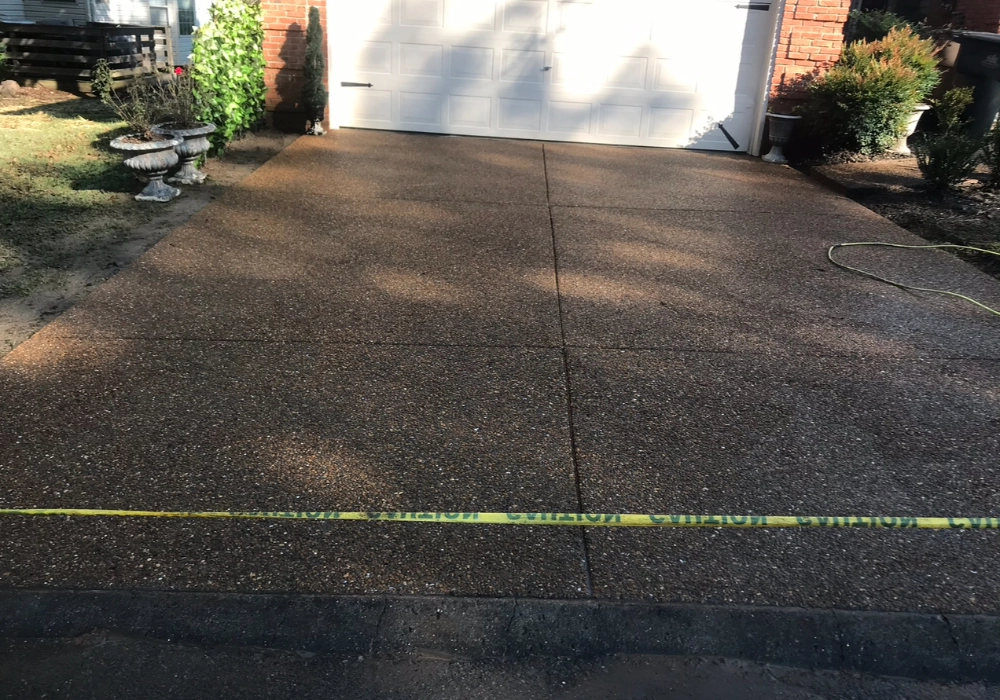
A cracked driveway. A sunken sidewalk panel. A patio that's started to tip toward the house. These are the kinds of problems Nashville homeowners tend to ignore until they can't. Here's how to tell what you're actually dealing with — and what it'll take to fix it right.
Concrete leveling and repair are two of the most searched-for services in Nashville — and for good reason. Middle Tennessee's clay-heavy soil shifts. Drainage from heavy spring rains erodes bases. Tree roots heave slabs. Freeze-thaw cycles in our shoulder seasons open up hairline cracks. The result: driveways that dip, sidewalks that trip, and garage floors that pool water where they used to drain.
The good news is that most concrete problems in Nashville don't require full replacement. The better news is that when they do require replacement, catching them early costs far less than waiting until a failing slab becomes a drainage or structural problem. This guide covers everything you need to know.
The Warning Signs: What to Look For
Most concrete damage in Nashville falls into one of two categories: surface deterioration (cracks, spalling, staining) and structural movement (settling, heaving, unlevel panels). Each has different causes, different repair approaches, and different urgency levels.
Here's what to look for when walking your property:
Hairline cracks — Common after the first winter. Cosmetic if under ⅛" wide and not growing.
Wide or jagged cracks — Over ¼" wide signals subgrade movement. Address before water infiltration worsens it.
Uneven or sunken panels — A trip hazard and a drainage problem. Classic candidate for concrete leveling.
Water pooling on the slab — Grade has shifted. May indicate base erosion underneath.
Spalling or flaking — Surface layer breaking off. Often caused by freeze-thaw cycles or deicing salts.
Heaving panels — Tree roots pushing from below. Requires root remediation before any leveling work.
Concrete Leveling in Nashville: What It Is and What It Fixes
Concrete leveling — sometimes called mudjacking, slabjacking, or foam lifting — is the process of raising a sunken concrete slab back to its original grade without removing and replacing it. It works by injecting material beneath the slab to fill voids in the subgrade and lift the concrete back into position.
In Nashville, the two most common methods are mudjacking and polyurethane foam lifting.
Mudjacking (Cementitious Slurry)
The traditional method. A slurry of Portland cement, soil, and water is pumped through 1.5–2" holes drilled into the slab. The pressure fills voids and lifts the concrete. Mudjacking has been used in Middle Tennessee for decades and remains effective for larger residential pads where weight isn't a concern. The patch holes are larger and more visible than foam alternatives, and the slurry adds significant weight to the subgrade.
Polyurethane Foam Lifting
The newer standard for most residential work. A two-part expanding polyurethane foam is injected through small ¾" holes. The foam expands, fills voids, and lifts the slab with precision — often within minutes. The injection holes are dime-sized and nearly invisible after patching. Foam is lighter than mudjacking slurry, cures faster, and doesn't wash out over time. It costs more upfront but typically offers longer-lasting results.
For most Nashville homeowners dealing with a sunken driveway section, settled patio, or tripping-hazard sidewalk panel, foam lifting is the cleaner, faster, and more durable choice. Mudjacking may still make sense for very large commercial pads or when budget is the primary constraint. We'll advise on which is appropriate for your project during the free estimate.
What Concrete Leveling Costs in Nashville
Concrete leveling in Nashville is almost always significantly cheaper than full slab replacement — often 30–70% less, depending on the scope. Here's what typical projects run:
Sidewalk panel (2–4 slabs): $300–$700 via foam lifting. The most common call we get.
Driveway section (1–2 panels): $500–$1,200 via foam or mudjacking, depending on void depth.
Patio slab settlement: $600–$1,800 via foam lifting, depending on size and site access.
Garage floor leveling: $800–$2,500 via foam lifting. Interior access and multiple voids affect pricing.
Pool deck settlement: $1,000–$3,000 via foam lifting. Multiple panels, precision required.
Full driveway mudjacking: $1,500–$4,000. Best suited for larger void fills and older driveways.
The biggest variable in any leveling quote is the size and depth of the void beneath the slab. A panel that's dropped ¾" because of minor base erosion is a quick fix. A panel that's dropped 3–4" because a washout has created a large cavity underneath requires significantly more material and time.
Concrete Crack Repair: When to Fix and When to Replace
Not all cracks are equal. The single most important question in any repair assessment is: is this crack moving? A static crack that's been the same width for three years is fundamentally different from an active crack that's widening every winter.
Repairs Worth Making
Hairline cracks under ⅛" wide with no vertical displacement between edges
Isolated surface cracks from shrinkage during the original cure
Cracks at control joints that haven't migrated outside the joint
Spalling limited to the top ¼–½" of the slab surface
When Repair Is the Wrong Answer
Cracks wider than ½" with active vertical displacement between sides
Slab has settled more than 2–3" and the base is compromised
Multiple cracking patterns suggesting full subgrade failure
Concrete surface is "alligatored" — a network of intersecting cracks across a large area
Slab is under 3" thick and was never properly reinforced
Surface patching a failing slab is the most common money-wasting mistake in concrete repair. If the subgrade hasn't been addressed, any patch poured over an active crack will re-crack — usually within one season. A good contractor will tell you when repair isn't the right call. If every company you talk to is eager to patch without assessing the base, keep looking.
Repair vs. Replace: How to Decide
Concrete repair or leveling makes sense when the slab is structurally sound but has settled, cracks are narrow and static, settlement is under 2" and recent, base erosion is localized, the slab is 5" thick with rebar, and any tree roots causing movement have been removed.
Full replacement is the right call when multiple panels are cracked and heaved, the slab is thin (under 3.5") and unreinforced, the base has completely washed out, cracks are wide and still actively moving, the drainage issue requires full regrading, or surface spalling has spread across the majority of the slab.
When in doubt, a free on-site assessment will tell you which category you're in. We'll be honest either way — we don't benefit from selling you a repair when you actually need a replacement, and we don't benefit from quoting a full pour when leveling will hold just as well.
Why Nashville Concrete Settles More Than You'd Expect
Nashville homeowners are often surprised that their driveway or patio settled within five or ten years of a pour. It happens here more often than in drier climates, and there are three main reasons.
Expansive clay soil. Middle Tennessee is dominated by Davidson, Maury, and Dickson series soils — all of which contain significant clay content. Clay shrinks when dry and swells when wet, creating subtle but consistent movement beneath any slab that isn't sitting on a well-compacted aggregate base.
High rainfall and drainage patterns. Nashville averages over 47 inches of rain per year. Water that drains toward a slab — rather than away from it — gradually erodes the compacted gravel base and washes fines out from underneath the concrete, creating voids that allow the slab to drop.
Tree proximity. Nashville is a heavily wooded city. Roots from mature hardwoods — oaks, maples, Bradford pears — routinely grow beneath driveways and patios, lifting panels or extracting moisture from the soil beneath them in dry summers, causing localized settlement when the roots contract.
When we level a settled slab, we also assess the drainage around it. In most cases, settling is a symptom of a drainage problem the homeowner didn't know they had. Fixing the concrete without fixing the drainage means you'll need leveling again in three to five years.
Frequently Asked Questions
Is concrete leveling permanent?
Polyurethane foam leveling is long-lasting — most lifts hold 5–10+ years when the underlying drainage issue is also addressed. It is not a permanent fix if the root cause (drainage, tree roots, or base failure) is left unresolved. We always evaluate the cause, not just the symptom, so we can give you an honest assessment of how long any repair should hold.
How soon can I use my driveway after foam leveling?
Polyurethane foam cures within 15–30 minutes. Most driveways can handle foot traffic within an hour and vehicle traffic within 1–2 hours of completing the work. This is one of the major advantages of foam over mudjacking, which requires 24–48 hours of cure time before the slab can bear load.
Can you repair a cracked concrete driveway in Nashville?
Yes, in many cases. Isolated cracks without vertical displacement can be routed and sealed with a polyurethane or epoxy crack filler that flexes with the slab. We'll be upfront if the cracking pattern suggests the slab is past the point of repair — patching a driveway that needs replacement isn't a service we'll sell you.
What's the difference between mudjacking and foam lifting?
Mudjacking injects a heavy cementitious slurry through large holes (1.5–2") to fill voids and lift concrete. Foam lifting uses an expanding polyurethane foam injected through small ¾" holes. Foam is lighter, cures faster, doesn't wash out over time, and leaves smaller patch holes. Mudjacking is less expensive upfront and still appropriate for some large-scale applications. We use both methods depending on the project.
How do I know if my sunken slab can be leveled or needs replacement?
The key factors are how far it's dropped, whether the base is intact, the thickness and condition of the concrete, and whether the cause of settling has been identified and stopped. A free on-site assessment is the only reliable way to know. We'll probe beneath the slab, check for voids, assess crack patterns, and give you a straight answer on which path makes more sense financially.
Get Your Free Quote
Other Related Posts
.webp)
Stamped Concrete Patios in Nashville: Costs, Patterns & What to Know
.webp)